About Bad Boy Bubby
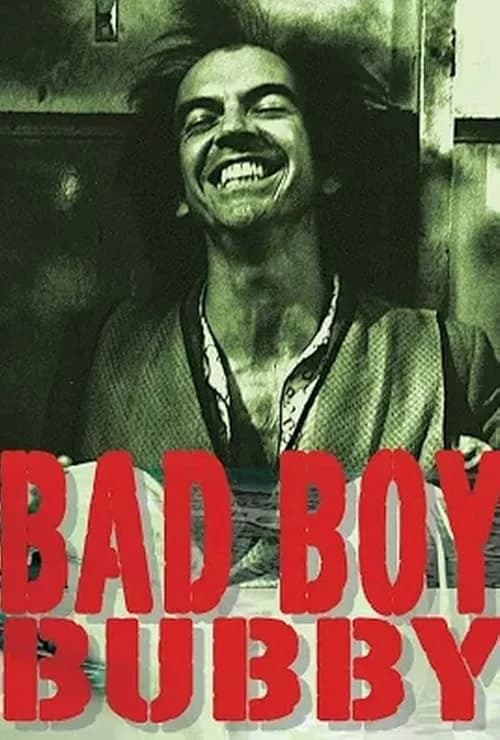
Bad Boy Bubby (1993) stands as one of the most audacious and unforgettable films in Australian cinema. Directed by Rolf de Heer, this dark comedy-drama follows Bubby, a man who has spent his entire 35 years imprisoned in a single squalid room by his manipulative mother. When he finally escapes, the film becomes a surreal odyssey as this completely naive, socially stunted individual encounters the modern world for the first time. His journey is by turns shocking, darkly humorous, and surprisingly poignant, as he interacts with everything from a religious cult to a rock band, experiencing sex, violence, and unexpected kindness with the same bewildered detachment.
The film's power lies in its uncompromising vision and the extraordinary central performance by Nicholas Hope. Hope embodies Bubby with a raw, unsettling authenticity that makes the character's horrific upbringing and bizarre perceptions utterly believable. De Heer's direction is fearless, using a unique audio technique for the first section to immerse viewers in Bubby's claustrophobic reality before opening up to a more conventional style as his world expands. The narrative refuses easy judgment, presenting Bubby's actions and the world's reactions with a stark, often nihilistic honesty.
Viewers should watch Bad Boy Bubby for its sheer originality and its profound, if disturbing, exploration of nature versus nurture, innocence, and societal corruption. It's not a comfortable watch, but it is a profoundly impactful one. The film has rightly earned its status as a cult classic, offering a cinematic experience that challenges, provokes, and stays with you long after the credits roll. For those seeking filmmaking that pushes boundaries, this is essential viewing.
The film's power lies in its uncompromising vision and the extraordinary central performance by Nicholas Hope. Hope embodies Bubby with a raw, unsettling authenticity that makes the character's horrific upbringing and bizarre perceptions utterly believable. De Heer's direction is fearless, using a unique audio technique for the first section to immerse viewers in Bubby's claustrophobic reality before opening up to a more conventional style as his world expands. The narrative refuses easy judgment, presenting Bubby's actions and the world's reactions with a stark, often nihilistic honesty.
Viewers should watch Bad Boy Bubby for its sheer originality and its profound, if disturbing, exploration of nature versus nurture, innocence, and societal corruption. It's not a comfortable watch, but it is a profoundly impactful one. The film has rightly earned its status as a cult classic, offering a cinematic experience that challenges, provokes, and stays with you long after the credits roll. For those seeking filmmaking that pushes boundaries, this is essential viewing.